Sunday, August 31, 2014

Cloud adoption grows in Brazil as organizations prepare for tighter budgets

Summary: Everything-as-a-service becomes the norm and "public" cloud will lose space, says research.
by Angelica Mari for Brazil Tech

As Brazilian organizations brace for a possible economic slowdown and tighter budgets, cloud adoption has grown steadily in the country as an effective way to reduce spending, according to recent research.
According to a survey carried out by consulting firm Capgemini with 415 technology decision makers in public and private organizations and published by newspaper Valor Econômico, Brazilian corporates will become a lot more aggressive in advancing their cloud plans after traditionally lagging behind the United States and Europe.
Cloud market revenues in Brazil should see a jump from $328.8m in 2013 to $1.1bn by 2017, according to separate research by consulting firm Frost & Sullivan.

The Capgemini study adds that 73 percent of the organizations polled in the retail, utilities, financial services, manufacturing and government sectors already utilize software-as-a-service (SaaS) and 92 percent will have a similar set-up within the next two years.
Infrastrcture-as-a-service (IaaS) and platform-as-a-service (PaaS) are also in use by 55 percent and 39 percent of all Brazilian corporates surveyed, according to the study.
A possible migration to the "private" cloud environment is another aspect of cloud adoption highlighted by the consulting firm's study: private environments should be in place at 75 percent of of those polled, whereas only 17 percent will remain using public cloud services such as Gmail and Dropbox.
However, analyst firm IDC predicts a rather different scenario, with growth rates in Brazil for public cloud services set to reach 74 percent year-on-year, with the revenues totaling $798m by 2015. According to IDC, the best seller will be SaaS, with $370m generated over the period, followed by IaaS with $362m and PaaS with $66m. 

Friday, August 29, 2014

July Newsletter – Network Functions Virtualization (NFV)

Vega newsletter is published monthly by Vega BI, and distributed to our partners to facilitate pursuit of a common interest in top-notch technologies.
As networks are populated with a large variety of proprietary hardware appliances, launching a new network service becomes more and more complex, time consuming and expensive process while the demand for technology, services and innovation is accelerating. Network Functions Virtualization aims to address this challenge by leveraging standard IT virtualization technology to consolidate many network equipment types onto industry standard. 

Introduction
Network Operators’ networks are populated with a large and increasing variety of proprietary
hardware appliances. To launch a new network service often requires yet another variety and finding the space and power to accommodate these boxes is becoming increasingly difficult; compounded by the increasing costs of energy, capital investment challenges and the rarity of skills necessary to design, integrate and operate increasingly complex hardware-based appliances. Moreover, hardware-based appliances rapidly reach end of life, requiring much of the procure- design-integrate-deploy cycle to be repeated with little or no revenue benefit. Worse, hardware lifecycles are becoming shorter as technology and services innovation accelerates, inhibiting the roll out of new revenue earning network services and constraining innovation in an increasingly Network-centric connected world.
Network Functions Virtualization (NFV) aims to address these problems by leveraging standard IT virtualization technology to consolidate many network equipment types onto industry standard high volume servers, switches and storage, which could be located in Datacenters, Network Nodes and in the end user premises.
We believe Network Functions Virtualization is applicable to any data plane packet processing and control plane function in fixed and mobile network infrastructures.
We would like to emphasize that we see Network Functions Virtualization as highly complementary to Software Defined Networking (SDN). These topics are mutually beneficial but are not dependent on each other. Network Functions can be virtualized and deployed without an SDN being required and vice-versa.

The Benefits
Virtualizing Network Functions could potentially offer many benefits including, but not limited to:
P  Reduced equipment costs and reduced power consumption through consolidating equipment and exploiting the economies of scale of the IT industry.
P  Increased speed of Time to Market by minimizing the typical network operator cycle of innovation. Economies of scale required to cover investments in hardware-based functionalities are no longer applicable for software-based development, making feasible other modes of feature evolution. Network Functions Virtualization should enable network operators to significantly reduce the maturation cycle.
P  Availability of network appliance multi-version and multi-tenancy, which allows use of a single platform for different applications, users and tenants. This allows network operators to share resources across services and across different customer bases.
P  Targeted service introduction based on geography or customer sets is possible. Services can be rapidly scaled up/down as required.
P  Enables a wide variety of eco-systems and encourages openness. It opens the virtual appliance market to pure software entrants, small players and academia, encouraging more innovation to bring new services and new revenue streams quickly at much lower risk.


Thursday, August 28, 2014

Latin America Cyber Security Market is Expected to Reach $11 Billion in 2019

New Report by MicroMarket Monitor - Latin America Cyber Security report defines and segments the cyber security solutions and services market in Latin America with analysis and forecast of revenue. This market is estimated to grow from around $5.29 billion in 2014 to$11.91 billion by 2019, at a CAGR of 17.6% from 2014 to 2019.


Cyber security is a broad collection of technologies, solutions, services, compliances, and risk management approaches to protect an organizations’ and users’ personal and professional data from cyber crimes. The government, public utilities, and enterprises are all dependent on the internet,
wireless technologies, and cloud-based services. Due to this dependency, cyber attacks have shown exponential increase in the past few years and have generated the need for unified cyber security solutions to support the enhanced enterprise mobility and strict data disclosure laws. Cyber security products are defined by possessing the capability to provide access management, authentication procedures, detection and responses to incidents, security updates or patch management, data recovery, mitigation of impacts, and risk & compliance management. The cyber security market is experiencing a booming phase because of the need for global cyber security capacity establishment built for a secure and resilient cyberspace.

The Latin American region has a high percentage of cyber crimes such as banking fraud and thefts, DoS attack, phishing scams, spam, and so on, impacting the national critical infrastructure. Several countries in the region are coming up with self protective initiatives against cyber threats. Countries such as Brazil, Chile, Colombia, Ecuador, and Peru have taken up cyber security as a political agenda and hence, security organizations are under soaring pressure to diversify their portfolios. Legal frameworks, infrastructure protection protocols, and best industry practices are the defining trends of the market and these factors are increasing the potential for domestic and foreign industries to expand in the Latin American cyber security market.

The report further provides competitive benchmarking of the leading players in the industry such as Cisco Systems, IBM, Northrop Grumman, CSC, and Symantec, among others, in terms of their product offerings, key strategies, and operational parameters. The report provides market trends, overall adoption scenarios, competitive landscapes, key drivers, restraints, and opportunities in this market. The report aims in estimating the current size and the future growth potential of this market across the different types, verticals, and countries.

Latin American countries such as Brazil, Chile, Colombia, Ecuador, and Peru are taking security as a political agenda and hence, security forces are under soaring pressure to diversify the security portfolio. Moreover, legal frameworks, infrastructure protection protocols, and best industry practices are defining trends are significantly opening doors for domestic and foreign industries to explore opportunities in the Latin American cyber security market. Brazil is the biggest market in Latin America, and as of 2014, contributed a major share of around 60.6% to the market in this region.

This market is segmented and forecasted on the basis of solutions and services of cyber security, such as identity and access management, risk and compliance management, encryption, data loss protection, unified threat management, firewall, antivirus and antimalware, IDS/IPS, security and vulnerability management, disaster recovery, DDOS mitigation, web filtering, and others. Services include consulting, design and integration, risk and threat assessment, managed security service, and training and education. The market is further segmented and forecasted on the basis of major countries, such as Brazil and others.

Wednesday, August 27, 2014

Mobile Phones To Detect Cervical Cancer In Third-World Women

MobileOCT— a social startup which is using mobile phones to accurately detect cancer in people who live in the developing world.
By Michael Lefkoe, NoCamels

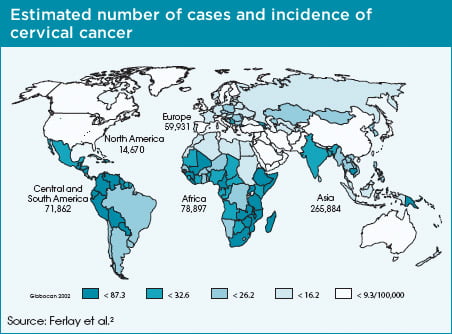
In 95 percent of cases, cervical cancer is an entirely treatable disease and can be treated for $28 in less than 40 minutes. Yet, due to lack of access to physicians and reliable medical equipment, hundreds of thousands of women in low-resource settings are dying unnecessarily every year simply because they are not getting diagnosed in time. However, one Israeli startup seems to be well on its way to changing that.


Five billion people have a phone, but no access to medical care
Recently featured on ‘Forbes’ list of 25 Hot Israeli Tech Startups To Watch, MobileOCT is trying to address the fact that while five billion people around the world have access to mobile phones, many of them do not have access to a physician. The company’s first project is to take on cervical cancer, the number one cause of cancer deaths for women in low-resource countries. To do so, they are producing a mobile colposcope that can be used with any mobile phone, anywhere in the world. “Technologically we’ve gotten to a place where we have very advanced sensors in everyday objects. And what MobileOCT is seeking to do is to help save lives with those sensors,” explained Ariel Beery, MobileOCT‘s CEO and Co-Founder, in an interview with NoCamels.
Sniffing out lung cancer is as easy as taking a breathalyzer test

Typical colposcopes used by Western physicians cost between $5,000 and $14,000, a price range that is undoubtedly out of reach for the 3.2 billion people who live on less than $3 of income per day. Clinically tested mobile colposcopies of comparable imaging quality produced by MobileOCT, on the other hand, will likely sell at the $400 price point, according to Beery. But diminishing the cost is only one of the ways that MobileOCT is impacting the future of cancer screening.

MobileOCT: A incrível startup social que usa telefones móveis para detectar o câncer do colo do útero em mulheres do terceiro mundo

É a MobileOCT— uma startup social que está usando telefones celulares para detectar com precisão o câncer em pessoas de países em desenvolvimento.

Em 95% dos casos, o câncer do colo do útero é uma doença totalmente tratável e pode ser tratada por US$ 28 em menos de 40 minutos. No entanto, devido à falta de acesso a médicos e equipamentos médicos de confiança, centenas de milhares de mulheres em ambientes de baixa renda estão morrendo desnecessariamente a cada ano, simplesmente porque não são diagnosticadas a tempo. No entanto, uma startup israelense parece estar prestes a mudar esse cenário.


Cinco bilhões de pessoas possuem telefone, mas não tem acesso a atendimento médico
Recentemente incluída na lista das 25 Startups Israelenses de Tecnologia Mais Promissoras da revista
Forbes, a MobileOCT tenta encontrar alguma vantagem no fato de que, enquanto cinco bilhões de pessoas em todo o mundo possuem telefones celulares, muitas delas não têm acesso a um médico. O primeiro projeto da empresa é dedicar-se ao câncer de colo do útero, a causa número um de mortes por câncer em mulheres de países com poucos recursos. Para isso, a companhia desenvolveu um colposcópio móvel, que pode ser usado com qualquer telefone celular, em qualquer parte do mundo. “Tecnologicamente, chegamos a um lugar onde temos sensores muito avançados em objetos do cotidiano. E o que a MobileOCT busca fazer é ajudar a salvar vidas com esses sensores”, explica Ariel Beery, CEO e cofundador da MobileOCT, em uma entrevista.

Os colposcópios convencionais usados ​​pelos médicos ocidentais custam entre 5 e 14 mil dólares, uma faixa de preço que é, sem dúvida, fora do orçamento de 3,2 bilhões de pessoas cuja renda não passa de 3 dólares por dia. Os colposcópios móveis produzidos pela MobileOCT, clinicamente testados e com qualidade de imagem comparável aos convencionais, por outro lado, devem ser vendidos a aproximadamente 400 dólares, segundo Beery. Mas diminuir o custo é apenas uma das maneiras que a MobileOCT está impactando o futuro do diagnóstico do câncer.

Monday, August 25, 2014

Brazil IT market expected to grow fast as government ups spending

New report covers the present scenario and the growth prospects of the IT market in Brazil for the period 2014-2018.

Brazil hopes to capitalize on the 2014 World Cup and the 2016 Summer Olympics to advance its goal of becoming the world's third largest information technology and communications (ITC) market, according to recent research. The Brazil IT market is expected to grow at a CAGR of 10.12% from 2014-2018.

This report, IT Market in Brazil 2014-2018, provides a detailed analysis of the market and focuses on the growth trends, major players, recent developments and key drivers of the IT market in Brazil.

Market overview
Currently, the major reason behind the exponential growth of the IT market in Brazil is the rapid growth of the software and IT services market segment. The hardware segment is also expected to witness increased spending due to growth in the use of tablets and data servers over the forecast period. Currently, the Brazil IT market ranks fifth in the world and is worth around USD 210 billion. Experts coin that the World Cup and the 2016 Summer Olympics will act as a boon for Brazil and for the ITC industry, as the government is slated to invest billions of dollars in a wide range of infrastructure projects. The infrastructure being developed will be used subsequently for the benefit of health, development and broadband communications. Research has shown major sporting events will generate investment of about USD 57 billion, of which 10% will be devoted to IT, either directly in data and image transmission systems, and indirectly, in areas such as security, health care, transportation, infrastructure. The Brazilian IT industry currently has two million professionals.

Key players
The key players in this industry include Accenture Inc., Hewlett-Packard Co., IBM Corp., Xerox Corp., Ascenty Data Centers Rental and Services SA, Capgemini S.A., Cisco Systems Inc., CI&T Software S.A., Dell Inc., Elipse Software, Google Inc., ICTS Consulting Services, Kryptus Information Security Ltda., Lenovo Group Ltd., Microsoft Corp., Predicta, SAS Institute Inc., Stefanini IT Solutions, Syhunt Cyber-Security Co. and Serpro, Sydle System.


Sunday, August 24, 2014

NFV - Network Functions Virtualization

 Executive Summary

Network Operators’ networks are populated with a large and increasing variety of proprietary hardware appliances. To launch a new network service often requires yet another variety and finding the space and power to accommodate these boxes is becoming increasingly difficult; compounded by the increasing costs of energy, capital investment challenges and the rarity of skills necessary to design, integrate and operate increasingly complex hardware-based appliances. Moreover, hardware-based appliances rapidly reach end of life, requiring much of the procure- design-integrate-deploy
cycle to be repeated with little or no revenue benefit. Worse, hardware lifecycles are becoming shorter as technology and services innovation accelerates, inhibiting the roll out of new revenue earning network services and constraining innovation in an increasingly Network-centric connected world.

Network Functions Virtualization aims to address these problems by leveraging standard IT virtualization technology to consolidate many network equipment types onto industry standard high volume servers, switches and storage, which could be located in Datacenters, Network Nodes and in the end user premises. We believe Network Functions Virtualization is applicable to any data plane packet processing and control plane function in fixed and mobile network infrastructures.

We would like to emphasize that we see Network Functions Virtualization as highly complementary to Software Defined Networking (SDN). These topics are mutually beneficial but are not dependent on each other. Network Functions can be virtualized and deployed without an SDN being required and vice-versa.

Virtualizing Network Functions could potentially offer many benefits including, but not limited to:
  • Reduced equipment costs and reduced power consumption through consolidating equipment and exploiting the economies of scale of the IT industry.
  • Increased speed of Time to Market by minimizing the typical network operator cycle of innovation. Economies of scale required to cover investments in hardware-based functionalities are no longer applicable for software-based development, making feasible other modes of feature evolution. Network Functions Virtualization should enable network operators to significantly reduce the maturation cycle.
  • Availability of network appliance multi-version and multi-tenancy, which allows use of a single platform for different applications, users and tenants. This allows network operators to share resources across services and across different customer bases.
  • Targeted service introduction based on geography or customer sets is possible. Services can be rapidly scaled up/down as required.
  • Enables a wide variety of eco-systems and encourages openness. It opens the virtual appliance market to pure software entrants, small players and academia, encouraging more innovation to bring new services and new revenue streams quickly at much lower risk.

To leverage these benefits, there are a number of technical challenges which need to be addressed:
  • Achieving high performance virtualized network appliances which are portable between different hardware vendors, and with different hypervisors.
  •  Achieving co-existence with bespoke hardware based network platforms whilst enabling an efficient migration path to fully virtualized network platforms which re-use network operator OSS/BSS. OSS/BSS development needs to move to a model in-line with Network Functions Virtualization and this is where SDN can play a role.
  •  Managing and orchestrating many virtual network appliances (particularly alongside legacy management systems) while ensuring security from attack and misconfiguration.
  •  Network Functions Virtualization will only scale if all of the functions can be automated.
  •  Ensuring the appropriate level of resilience to hardware and software failures.
  • Integrating multiple virtual appliances from different vendors. Network operators need to be able to “mix & match” hardware from different vendors, hypervisors from different vendors and virtual appliances from different vendors without incurring significant integration costs and avoiding lock-in. 
Solutions to these technical challenges are available, or could be made available, it recommend that the IT and Networks industries combine their complementary expertise and resources in a joint collaborative effort to reach broad agreement  on standardized approaches and common architectures which address these technical challenges, and which are interoperable and have economies of scale.

To accelerate progress, a new network operator-led Industry Specification Group (ISG) with open membership is being setup under the auspices of ETSI to work through the technical challenges for Network Functions Virtualization as outlined in this white paper. The formal creation process of this ETSI ISG has been already started.