Monday, October 19, 2015

Novel Eye-Tracking Device EyeControl Enables ALS Patients To Communicate

Now, a new Israeli-made device called EyeControl is striving to give a voice to those who are unable to verbally communicate, using the movement of their eyes.
By Roseanne Tabachnik, NoCamels

The viral “Ice Bucket Challenge” that catapulted ALS into our lives last year, encouraging people to
film themselves pouring ice water over their heads, became a social media sensation within weeks. While the philanthropic blockbuster sparked millions of donations to ALS research, still nearly 6,000 Americans are diagnosed with the neuron motor disease every year, losing almost all of their communication skills as the disease progresses.


Amyotrophic lateral sclerosis (ALS), often referred to as Lou Gehrig’s Disease, is a progressive neurodegenerative disease that affects nerve cells in the brain and the spinal cord. On average, most patients are diagnosed with the disease when they’re 55-years-old, and eventually suffer from a complete loss of speech. That’s where the EyeControl device steps in.

The screen-free, affordable mobile communication device was developed by a group of Israeli
entrepreneurs who were personally touched by the disease. Both EyeControl co-founder Or Retzkin and head of product Tal Kelner lost their grandparents to ALS, and have been committed to helping individuals who are “locked-in” or are unable to speak due to muscle deterioration ever since. In addition, CTO Itai Kornberg introduced the technology when he embarked on the mission to help an ALS patient communicate with his eyes using a computer to translate the movements.


The EyeControl system is a combination of computerized glasses and a mobile app that captures eye movements and translates them into audio or text commands using an eye-tracking algorithm. The glasses are integrated with a camera that detects eye movement, which is then analyzed by a micro-sized computer installed in the glasses. Using a Bluetooth connection, the commands are then relayed through the system’s headphones or speaker into the patient’s ear.

The system is based on a three-step model: Patients are able to call for assistance, put together pre-determined sentences such as “I am cold,” and compose sentences simply by swiping their eyes in certain directions.

To get the device to market, the company has launched an Indiegogo crowdfunding campaign in hopes to raise $30,000. Since the start of the campaign on July 7, the startup has exceeded its $30,000 goal, reaching $42,000 in less than a month. Today, the company decided to extend the campaign in order to raise up to $50,000 in the course of another two weeks. Despite the company’s time-crunched Indiegogo campaign, Retzkin could not confirm a product release date.

A screen-free and affordable device

EyeControl has set its sights on making a difference in the lives of ALS patients by teaming up with
the non-profit organization Prize4Life, headed by CEO Shay Rishoni, an ALS patient. This long-term partnership is aimed at raising awareness to ALS and advocating EyeControl’s solution.


However, EyeControl is not alone in the realm of eye-gaze systems for the disabled. Systems like Tobii DynaVox, LC Technologies, and even the Israeli-invented technology behind the Sesame Phone, all compete to open up access to touch-screen dependent technologies. EyeControl, which unlike many of its competitors doesn’t require a screen, stands out from the competition mainly thanks its portability.

“Most patients need to be at home or in front of a computer screen to use a device,” Retzkin tells NoCamels. “So, if you go inside a car or lie down in bed and the screen is not in front of you, you cannot communicate.”

The portable device uses an external battery as a source of electricity, allowing the patient to travel and communicate through the glasses, regardless of location.

“We use vocal feedback, so there is an ear set, not a screen,” Retzkin explains. “It’s very intuitive, so you can swipe with your eye according to what you hear.”

And unlike similar devices, which range in cost from $3,000 to $10,000, EyeControl is expected to be priced at the affordable price of $100, with the goal of ensuring accessibility to all patients, regardless of their financial standing. According to Retzkin, his team orders the materials in bulk and is building the device in-house, which makes the system significantly cheaper.

Thursday, October 15, 2015

Brazil IT sector continues to create jobs

The number of positions has gone up by 44,2 percent despite recession, says research
By Angelica Mari for Brazil Tech

The Brazilian technology sector continues to create jobs despite the country's current economic slowdown, according to a recent study.

Over the first half of 2015, the number of IT jobs on offer in Brazil has gone up by 44,2 percent, according to numbers from human resources consultancy Catho.

In June alone, 10.105 positions were created - that's 3.640 more jobs than the same month last year.

Out of the top destinations for IT job seekers in Brazil, São Paulo concentrates 32 percent of all the tech positions offered in the country, followed by Rio de Janeiro with 9,77 percent and Porto Alegre, the home of major companies such as SAP, with 6,23 percent of all jobs.

Other key centers with opportunities for technology professionals include Curitiba - where most technology workers of banking multinationals such as HSBC are located - with 4,78 percent of all IT jobs in Brazil.

Another top destination is Belo Horizonte, which concentrates 3,66 percent of all IT positions in the country.

According to data from Brazilian IT association Brasscom, the local market currently employs 1.3 million IT professionals and that number will see a 30 percent increase by 2016.

Monday, October 12, 2015

10 Israeli startups to watch in 2015

The Israeli start-up scene is saturated with newcomers fighting for a spot in the limelight. The following 10 companies have passed some key hurdles and challenges that make them an interesting watch for investors and consumers around the world.
By Dennis Mitzner, TNW News

The list comprises an eclectic list of start-ups that are either breaking into the mainstream in their respective industries, or are still at early stages, but look to make significant inroads in the next few months.


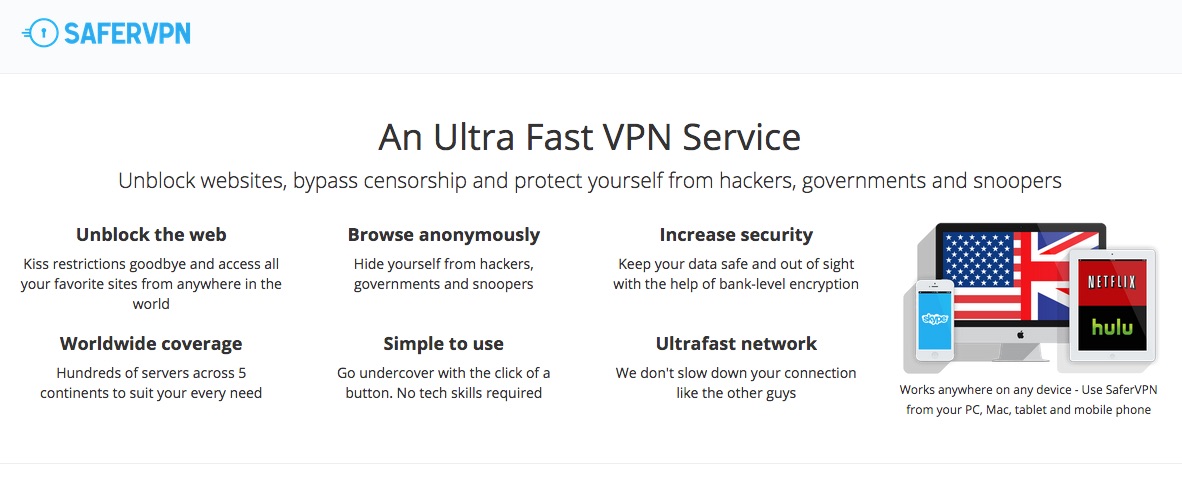
Safer VPN


SaferVPN, founded by Amit Bareket and Sagi Gidali, launched a VPN-based startup that provides secured re-routed Internet access throughout the world. The company’s software allows users to circumvent local
restrictions and access websites, while simultaneously allowing users to keep their personal information safe and encrypted for anonymous browsing.
“We’ve seen more and more online censorship in the past couple of years, with governments forcing severe restrictions on their citizens’ freedom. In the West we take it for granted that we can express ourselves on social media, publish videos on sites like YouTube, or write letters to newspaper editors for publication. That’s not really a choice if you’re living [under] some regimes,” said Gidali.
Some months ago, the company partnered with Advancing Human Rights, a global non-profit to launch ‘Unblock The Web‘, a crowdfunding campaign to fight internet censorship and give dissidents anti-censorship tools.
“It has become increasingly hard to stop the flow of information. People in the free world can play a key role in helping activists get information out to alert the world to their regime’s brutality,” said David Keyes, the Executive Director of Advancing Human Rights.
Funding: In March 2015, Safer VPN received approximately $500k from private individuals. The company  has been generating revenue from day one, with a steadily growing user base.
“The money was raised a month ago and will be used to accelerate growth, user acquisition and unique projects that we plan,” said Sagi Giladi, CEO of the company.

Tuesday, October 6, 2015

Brazilian e-commerce to reach $19.7bn in 2015

There will be an increase in online sales of 17,3 percent on last year's numbers, says research
By Angelica Mari, Brazil Tech

E-commerce in Brazil will generate $19.7bn in 2015 - a 17,3 percent increase on last year's figures, according to research from consulting firm eMarketer.

Within Latin America, Brazil is the best performing market, followed by Mexico with predicted sales of $5.7bn and Argentina, where the forecast is $4.96bn, according to the research.

E-commerce revenues in Latin America should reach $38.2bn in 2015 - a 23,9 percent increase on 2014 numbers.

According to the consultancy, the forecast is that the region will generate $84.7bn in online sales by 2019.

Separate research by AT Kearney suggests that Brazil is currently the ninth largest market in the world in terms of online sales, with 106 million Internet users and 60 million online consumers.

However, the AT Kearney report also points out that between 2014 and 2015 Brazil has performed poorly in the global e-commerce market: due to the current economic slowdown, the country went from 7th to 21st place in the analyst's ranking of 30 countries, based on aspects such as online commerce attractiveness and growth potential.

Thursday, September 17, 2015

August Newsletter – Israel's Sustainable / Renewable Energy Technology

Israel has long played a major role in the Cleantech field, evolving from a nation of limited natural resources to a significant player in global sustainability. The Israeli sustainable energy industry is today considered a global pioneer thanks to breakthrough technological innovations in this area.
Israel's Sustainable / Renewable Energy Technology is Vega’s topic of the month. For a full coverage of this topic please refer to the Full Article published at our Blog.

Israel's Sustainable / Renewable Energy Technology 

Israel has long played a major role in the Cleantech field, evolving from a nation of limited natural resources to a significant player in global sustainability. The Israeli sustainable energy industry is
today considered a global pioneer thanks to breakthrough technological innovations in this area.

The Global Energy Challenge
The use of energy has always been key to the development of human society, enabling humanity to control and adapt to its environment for centuries. Nowadays, humanity is forced to utilize all of its creativity and technological innovation to answer the rising energy needs. In turn, this challenge also presents a huge market and business opportunity for those companies that can provide real, relevant and outstanding sustainable energy solutions.

Sustainable/ Renewable energy industry fast facts
P  Renewable forms of energy have contributed 14% of the growth in global power generation over the past three years.
P  World primary energy consumption - oil, natural gas, coal, and nuclear energy - fell by 1.1% in 2009, indicating a rise in sustainable energy use.
P  Solar energy demand has grown at about 30% per annum over the past 15 years (hydrocarbon energy demand typically grows between 0-2% per annum).
P  The projected global clean energy investment in 2017 will be $254.5 billion.
P  Only 1.7% of the world’s total energy supply is provided by sustainable sources such as solar, wind, geothermal, etc.

“It is not an exaggeration to say that the future of human prosperity hinges on finding a way of supplying the world’s growing energy needs in a way that does not irreparably harm the environment. Until recently, it looked as if we had plenty of time to meet that challenge. No longer.”

Israel - A history of turning desert into oasis
Since its foundation in 1948, Israel has placed great emphasis on conserving energy wherever possible; developing innovative, alternative, and sustainable solutions to combat the nation’s lack of natural resources. Ranging from its decades-long use of solar thermal energy, to its development of unique biofuels, the country has consistently turned its natural disadvantages around, achieving great success and demonstrating expertise and knowledge in the field of sustainable energy. Energy sustainability has been a national priority in Israel since day one, and this emphasis has proven itself in one of the world’s most emergent and well-crafted energy systems.

ï  Israel serves as the base to over 100 start-ups in the sustainable energy sector.
ï  Solar water heaters are used in over 90% of Israeli homes.
ï  Israel houses one of the world’s largest solar energy dishes at the Ben-Gurion National Solar Energy Center.
ï  The Israeli Public Utility Authority and National Infrastructures Ministry have established feed-in tariffs for the development of solar and wind power technology, encouraging major investment and innovation into these fields.
ï  As of October 2010, a consortium of leading Israeli companies, investors and academic institutions began to develop and operate a brand new technology center for sustainable energy in the south of the country.
ï  Israel is currently embarking on programs that will enable it to integrate alternative energy systems and implement energy efficiency technologies to meet climate change challenges. 

Thursday, September 10, 2015

São Paulo is the best tech startup ecosystem in LatAm

São Paulo is the best place in Latin America for budding tech entrepreneurs, according to a study.Availability of capital, startup performance and market reach are the city's strongest points
By Angelica Mari , Brazil Tech

The study Global Startup Ecosystem Ranking 2015 ranks the largest urban center in Brazil as the 12th most attractive city to start a technology-based business.

According to the research, carried out by software development firm Compass, the city has gone up one position in relation to the previous study, published in 2012.

The criteria used in the study includes ability to expand internationally and local talent, as well as availability of capital, startup performance and market reach - the last three points being the strongest in São Paulo.

São Paulo was the only Latin American city to appear among the top 20 locations cited in the ranking. According to the study, the best locations to start a tech business are the Silicon Valley, New York City, Los Angeles, Boston and Tel Aviv.

The Global Startup Ecosystem Ranking is based on interviews with more than 200 entrepreneurs and industry players in 25 countries, as well as a five-year survey of more than 11,000 startups and investors worldwide.

Tuesday, September 8, 2015

Start-up cracks wheat genome – in months, not years

For a decade, dozens of scientists in 55 countries toiled to figure out the DNA sequence of wheat – but were unable to meet their goal.
Israeli biotech start-up NRGene, which announced this week that — working with experts at Israeli universities — it was able to map out the genome for wild Emmer wheat in about three months.

By David Shamah, The Times of Israel

“It’s a tremendous accomplishment, both from the technology point of view and for helping to
prevent world hunger,” said Guy Kol, founder and vice president of research and development at Ness Ziona-based NRGene. “As a result, it will be much easier for scientists to develop breeds of bread wheat that will thrive in drier, hotter climates. This is going to be crucial as the world’s population grows, and climate change becomes even more pronounced in the coming decades.”

“The repercussions of the mapping will be felt around the world,” said Dr. Assaf Distelfeld, PhD, of Tel Aviv University (TAU), a renowned wheat geneticist and the primary researcher on the project. “Scientists will now be able to identify key genes in the Emmer wheat and introduce them into commercial wheat via classical breeding, creating hardier varieties across environmental conditions, ultimately increasing the global food supply.”

The potential of genome mapping

Genome sequencing is the latest tool, and among the most important, available to agronomists who are helping farmers develop better versions of staple crops – the most important, according to UN statistics, being maize (corn), along with wheat and rice. As the global population grows, more, and more nutritious food will be needed. This becomes an ever-greater challenge as the world “loses” arable land to the effects of pollution, desertification, and other man-made and natural causes.

Mapping genomes for plants allows scientists to see what makes them “tick” and the attributes they contain which allow them to thrive in specific environments. This holds out great promise for helping to increase the food supply, which is one reason why, as DNA sequencing became feasible in the 1990s, scientists wasted no time in trying to decipher the genetic code that make up maize and rice.


Those projects took between five and ten years to complete, with the rice genome mapped in 2002, and the maize genome completed in 2009. Wheat’s genetic complexity and the amount of information to be analyzed proved to be a much greater challenge. The wild Emmer wheat genome is four times bigger than the human genome, which was mapped in 2003 – and 30 times bigger than the rice genome.


While the data culled from genome mapping could be used to genetically modify a crop, Kol told the Times of Israel that the more common use case is to enable more precise breeding of specific traits in subsequent generations of crops. Farmers have actually been doing this for thousands of years, saving seeds from plants that were better able to withstand the vagaries of weather, insect infestation, and other environmental factors.

Usually it takes 15 years or more to develop a strain that it more suited to specific conditions. With DNA data pointing out a variety’s specific characteristics, farmers will be able to breed crops that can stand up to arid surroundings, brackish water, and other harsh environmental conditions in as little as three years, said Kol.

Wheat genome sequencing research was undertaken in 2005, by the International Wheat Genome Sequencing Consortium (IWGSC), which includes over 1,100 scientists, farmers, and food industry executives. By 2015, the group had spent $54 million on developing the genome for bread wheat (the variety used in most temperate climates) – but had not yet completed its work.

How to process 17 billion pairs of base codes?

Enter NRGene, which, in collaboration with Tel Aviv University’s Institute for Cereal Crop Improvement, undertook to map the genome of wild Emmer wheat, an ancient variety endemic to the Middle East, found in many archaeological excavations and ancient tombs. The variety, thought lost, was (re)discovered in 1906 in what is today Rosh Pina, and is used chiefly in mountainous regions in Turkey, central and northern Europe due to its ability to withstand drier and colder environments endemic to those areas.

It looked like a good place to start in the search for genetic factors that could help breed hardier varieties of bread wheat (the preferred variety for commercial production), said Kol. Using its advanced and patented big data analysis system, NRGene was able to generate the Emmer wheat’s genetic base pair codes – 17 billion of them (humans have about 3 billion). Besides the sheer amount of data, said Kol, the NRGene system had to differentiate between a lot of confusing and excessive information.

“Almost 99 percent of the code is the same in each gene,” said Kol. “The difficulty in deciphering those differences was one of the reasons the IWGSC was unable to complete its work.” Instead of the tens of millions of dollars the IWGSC spent, NRGene spent under a million dollars to map Emmer wheat.


Now, with the Emmer genome deciphered, he added, scientists will be able to isolate specific characteristics that could successfully pair up with traits in bread wheat that will allow for growing under specific circumstances. “For example, many farmers are adopting drip irrigation to save money and water, but not all varieties of bread wheat thrive under those circumstances. With specific knowledge of genetic data, we could breed a variety that includes characteristics that would be more successful in a drip irrigation environment.”

Besides the benefit to the world of the wheat research, NRGene’s accomplishment is also a major development for the agricultural business. “Besides wheat, we have successfully mapped over 30 other genomes, some for academic research, and others for commercial use.” In that latter category, said Kol, was a major producer of animal feed, which turned to NRGene for a genome that would help it breed more nutritious varieties of corn for its animals.


In May, NRGene announced that, together with scientists from the USDA and the University of Illinois, it had mapped the rainbow trout, which will enable the breeding of tastier and longer-lived varieties of farmed fish, said NRGene CEO Dr. Gil Ronen.

“Aquaculture is at a critical juncture. The significant decrease in the wild fish population means that they must take the lead in continuing to ensure genetic diversity while still breeding healthy, protein-rich, and disease resistant fish,” said Ronen. “Mapping a full and reliable reference genome is a critical step toward efficient breeding, and the trout is simply the first of many critical species for the aquaculture industry that must be mapped.”

Now that Emmer wheat has been “conquered,” NRGene will be working on more basic crop projects, said Kol. “The world is getting drier, and the need to develop varieties of corn and rice that can withstand that is more important than ever. Imagine being able to develop a variety of rice that would be able to go weeks or longer without rain. That would be a very important accomplishment.”